
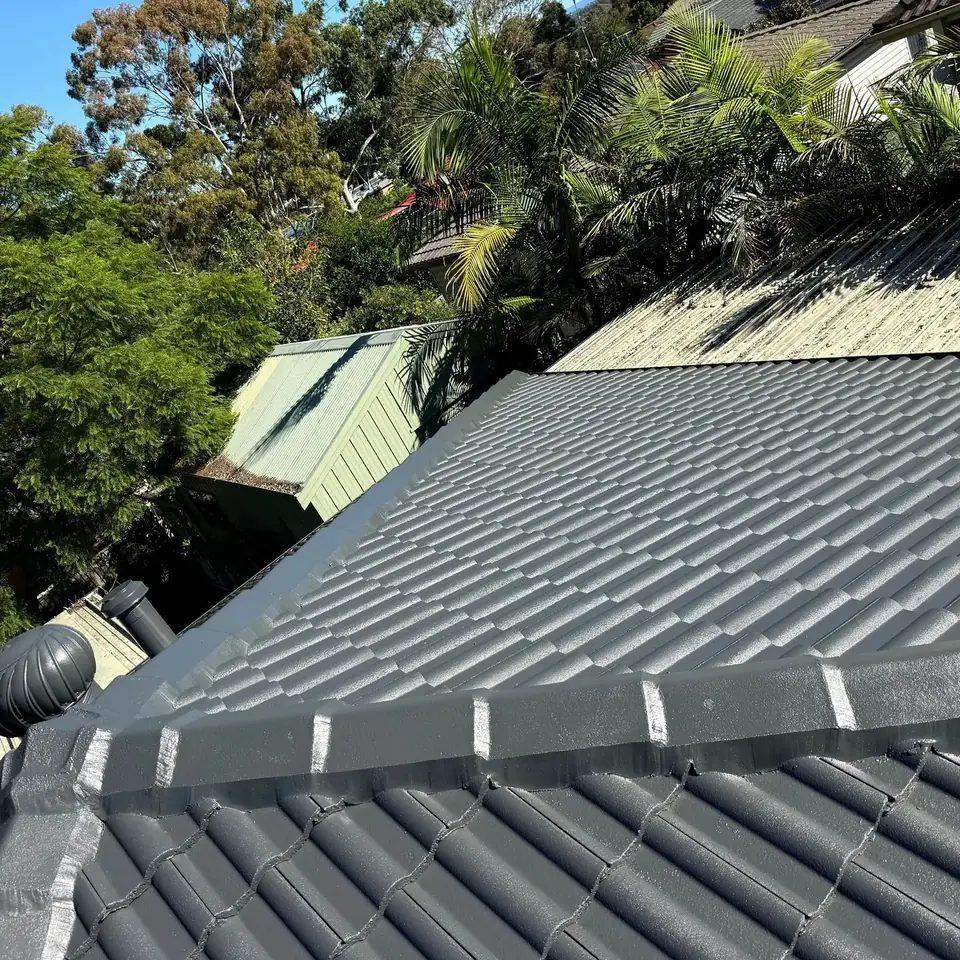
Quick answer: Ridge pointing is the seal that holds your ridge caps in place and keeps rain out of the roof space. When it cracks, crumbles or falls out, water gets under the caps. Repointing renews that seal. If the caps themselves are loose, shifted or broken, they also need rebedding. Catching it before storm season is usually a much smaller job than repairing water damage afterwards.
Sydney's storm season runs from about October to March, according to the NSW SES. By now the top of your roof has had a full year of UV, heat and heavy rain. The ridge is the highest and most exposed line on the roof, and the pointing along it is one of the first things to give. We regularly see tiled roofs where the tiles are in decent shape but the ridge pointing has cracked from one end to the other.
This guide shows you how to spot the warning signs from the ground, how to tell repointing from rebedding, what a proper job involves, and how to get your roof ready before the first big storm.
What is ridge pointing, and why does it matter?
The ridge caps along the top of your roof sit on a bed of mortar or a flexible bedding compound. Pointing is the finishing layer over the joins that seals them and makes the ridge watertight.
Over time, sun, dust and weathering make old pointing brittle. It shrinks, cracks and lets go. Newer flexible pointing compounds are designed to move with the roof and last longer than traditional cement mortar, but no pointing lasts forever.
Once the seal breaks, rain gets under the caps and into the roof space, where it can soak timber and insulation long before a stain shows on your ceiling.
7 signs your ridge capping is failing
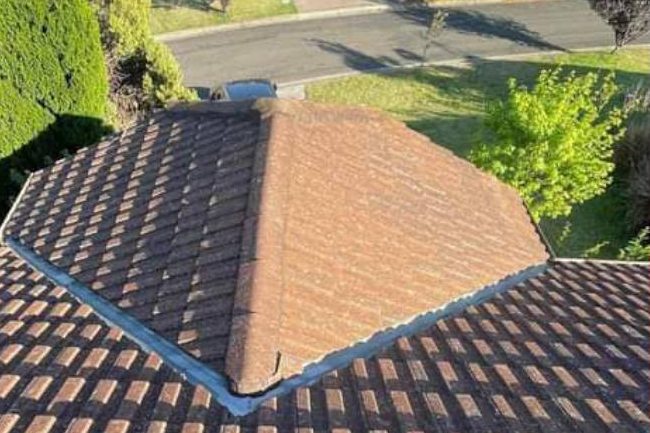
- Cracks in the pointing. Fine lines running along the joins between caps are usually the first sign.
- Crumbling or missing pointing. Bits of mortar in your gutters or on the driveway, or gaps where you can see the bedding underneath.
- Caps out of line. A ridge that looks wavy or uneven means the bedding underneath may have failed.
- Loose, cracked or missing ridge caps. If a cap rocks or has slipped, it needs more than a surface fix.
- Moss or weeds along the ridge. Often a sign that moisture is sitting in the join.
- Ceiling stains after rain. Especially on the upper side of a room, close to the ridge line.
- Daylight in the roof space. If you can see light along the ridge from inside, so can the rain.
The 2-minute ground check
You do not need to climb up. Stand at the far end of your yard or across the street and look along each ridge and hip with binoculars, or the zoom on your phone camera. Look for cracks, gaps, uneven lines and missing pieces, and take photos. Check your gutters for bits of mortar too.
Wet tiles are slippery and a fall from a roof can be serious. Leave the climbing to a roofer.
Repointing or rebedding? How to tell
The two jobs sound alike but they are different. Here is the simple version:
| Repointing | Rebedding and repointing | |
|---|---|---|
| What it is | Renews the sealing layer over the joins | Removes the old bedding, resets or replaces the caps, lays new bedding, then repoints |
| Best when | The caps are firm and in line, but the pointing is cracked or worn | The caps are loose, shifted, broken or missing |
| Typical signs | Fine cracks, small gaps, crumbling surface | Wavy ridge line, rocking caps, big gaps |
| Size of job | Smaller | Larger, with more preparation |
The honest answer only comes from an onsite inspection, because a roofer needs to check whether the caps are firm. If the pointing is failing across the whole roof and the tiles are weathered as well, a full roof restoration can be better value than patching one problem at a time. Our guide on roof restoration vs replacement explains how to decide.
How a proper repointing job is done
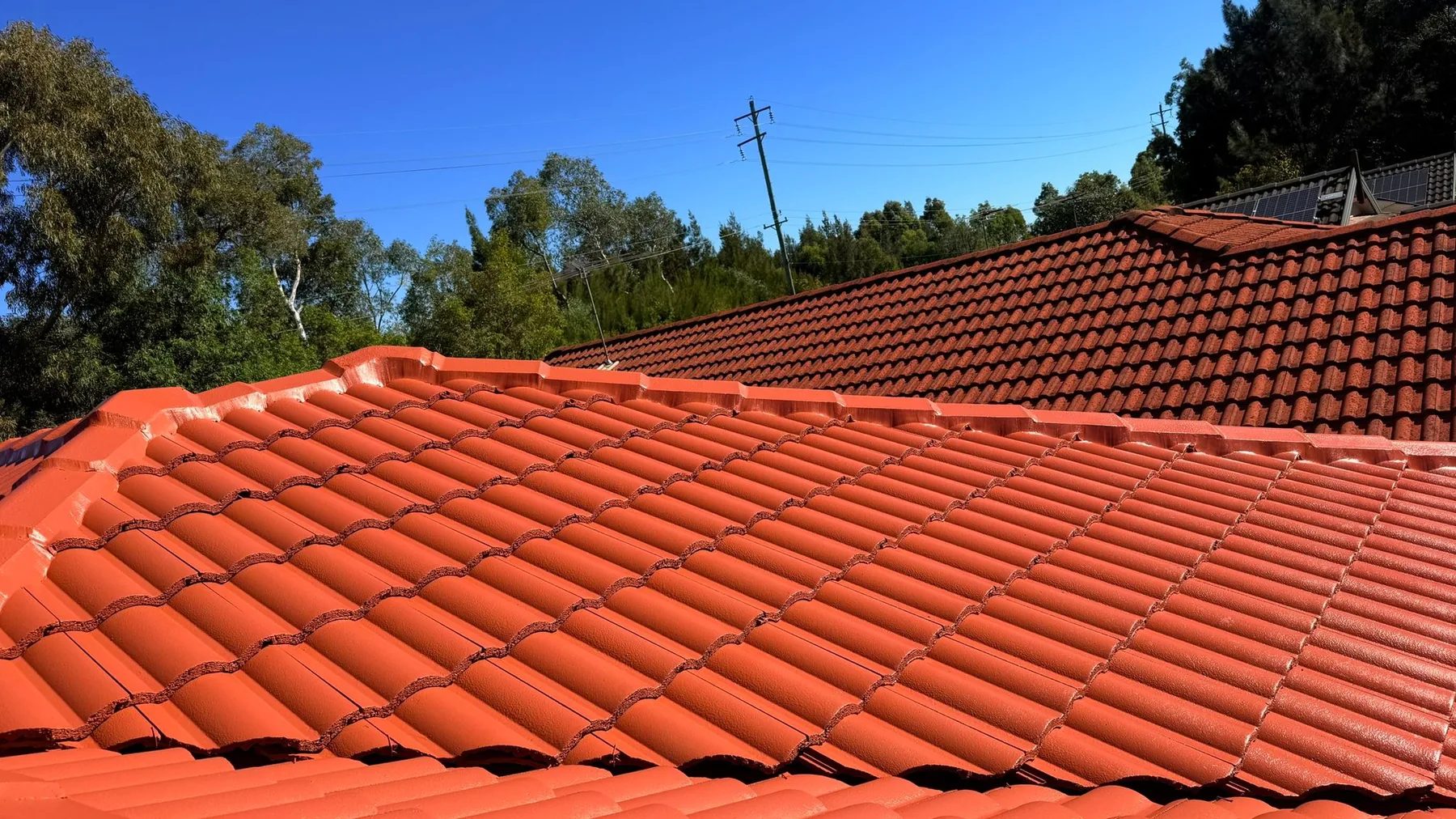
Good ridge work is mostly careful preparation. Here is how we approach repointing:
- Inspect and photograph. We check every ridge and hip and send you photos of what we find, so you can see the problem yourself.
- Remove the failed pointing. Old, cracked pointing is ground or chipped out so the new material bonds to a sound surface.
- Rebed anything loose. Caps that have shifted are lifted and set again on fresh bedding, and broken ones are replaced.
- Clear the dust and debris. The ridge is cleaned so nothing gets trapped under the new pointing.
- Apply new pointing. The joins are re-sealed with a pointing compound. It is worth asking any roofer which product they use.
- Leave weep holes. Small gaps in the pointing let any moisture that does get in escape rather than sit under the caps.
- Let it dry. Pointing needs to dry before anything goes over it, and sealant needs about 24 hours to cure. We would rather take an extra day than paint over something that has not set.
- Photos and clean-up. You get photos of the finished work and the site is left tidy.
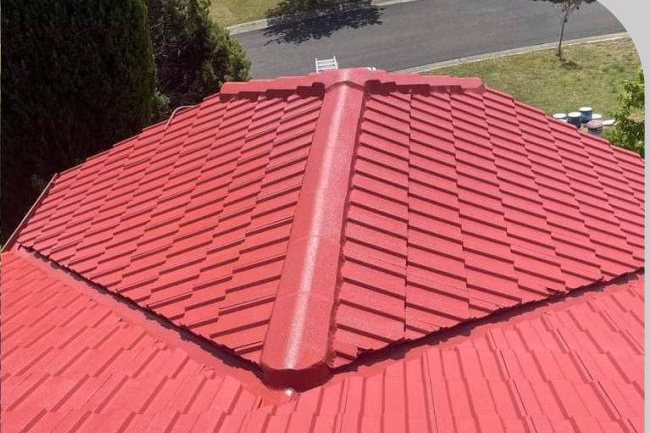
If you are also repainting, the pointing goes first and the roof painting follows once it has dried, so the coating is not applied over damp work.
Mistakes that make homeowners pay twice
- Painting over cracked pointing. Paint changes the colour but does not fix a failed seal underneath.
- Smearing sealant over cracks. It can buy a little time, but the cracks often come back, and loose caps still need rebedding.
- Taking the cheapest quote with no written scope. Ask what is included: removing old pointing, rebedding, replacing broken caps, weep holes and clean-up.
- Waiting for a stain. By the time water shows inside, it may have been getting in for a while.
- Climbing up yourself. It is not worth the risk on a wet, steep or high tiled roof.
Get your roof ready for storm season
Work through this list before the first big storm:
- Do the 2-minute ground check along every ridge and hip
- Have cracked pointing, loose caps and broken tiles fixed through roof repairs
- Clear leaves from gutters and downpipes, or read our guide on gutter replacement if they are rusted or sagging
- Trim branches that hang over the roof
- Book roof maintenance so the whole roof is checked in one visit
- Save our number now. If a leak does start, see what to do when your roof leaks or call for emergency roof repairs
What affects the cost of repointing
Prices vary from roof to roof, so we do not quote over the phone. The main factors are:
- The total length of ridges and hips
- Roof pitch and height, which affect access
- Whether the caps only need repointing or also need rebedding
- How many caps are broken and need replacing
- Whether the job is combined with painting, repairs or a full restoration, which means access and set-up are done once
We quote after an onsite inspection and put the scope in writing, so you know exactly what is included before any work starts.
Not sure what your ridge needs?
Send us your ground-check photos or book a free onsite inspection. We will tell you honestly whether you need a repoint, a rebed, or nothing yet. Get a free quote or call 0434 860 035.
Frequently asked questions
How do I know if my roof needs repointing?
Look along the ridges from the ground for cracked, crumbling or missing pointing, caps that look uneven, and moss or weeds in the joins. Stains on the ceiling after rain near the top of a room can also point to a failing ridge. An onsite inspection confirms it.
What is the difference between repointing and rebedding?
Repointing renews the sealing layer over the joins between ridge caps. Rebedding removes the old bedding and resets or replaces the caps on new bedding, and is followed by repointing. Rebedding is needed when caps are loose, shifted, broken or missing.
How long does ridge repointing last?
It depends on the materials, the preparation, the quality of the workmanship and how exposed the roof is. Flexible pointing compounds are designed to last longer than traditional mortar, but no pointing lasts forever, so check your ridges as part of a yearly roof inspection.
Can I repoint my roof myself?
We do not recommend it. The work is at height on slippery tiles, and poor preparation or the wrong mix can cause the pointing to fail early or leave the caps unsupported. A professional can also check the tiles and flashings while they are up there.
Will cracked ridge pointing always cause a leak?
Not always straight away. But it lets water in whenever rain is heavy or wind-driven, and that water can soak timber and insulation before any stain appears inside. It is cheaper to fix the seal than the damage it lets through.
Can repointing be done in wet weather?
Pointing and sealants need dry conditions to set properly, so we plan the work around the forecast. If rain is on the way, we would rather move the day than apply it into wet weather.