
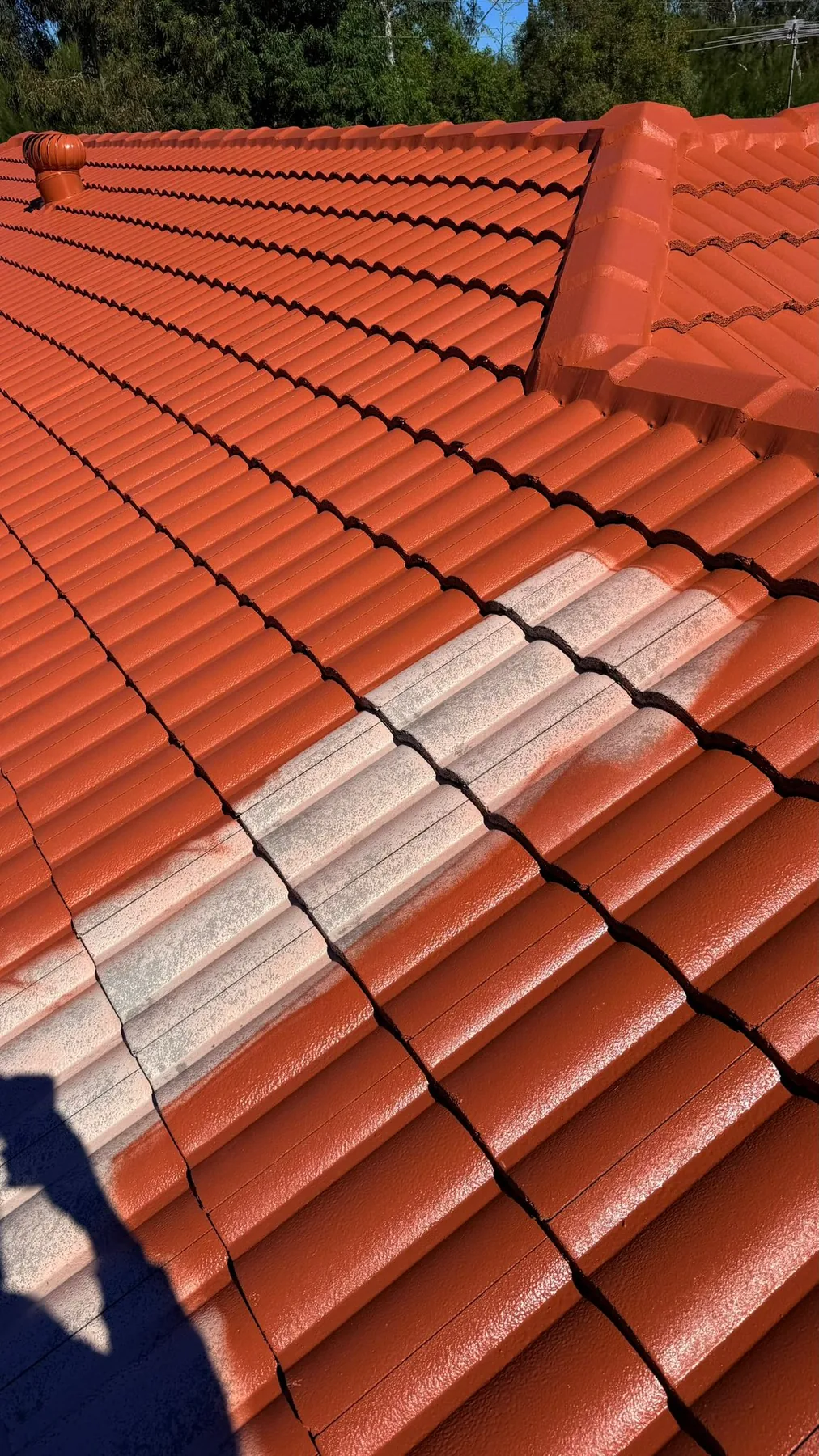
What Is the Point of Repointing?
Repointing helps finish and secure tiled-roof ridge and hip capping. Understanding the difference between pointing, bedding and re-bedding makes it easier to know what a worn ridge line may actually need.
Repointing is about the ridge and hip capping — not simply coating the whole roof.
On a tiled roof, ridge and hip caps sit above the main roof tiles. Bedding mortar supports those caps, while pointing forms the finished edge and helps hold the capping securely in place.
As the roof ages and moves through changing weather conditions, pointing can crack, loosen or separate. Repointing removes unsound material where required, prepares the area and applies fresh flexible pointing so the ridge or hip detail is finished and secured again.
Modern flexible pointing is designed to accommodate normal roof movement better than brittle traditional mortar pointing.
BEDDING Mortar beneath the ridge or hip capping.
If the bedding itself is cracked, missing or no longer supporting the capping properly, re-bedding may be needed before fresh pointing is applied.
Inspect first, then repair the layers that actually need attention.
The original Sydney Affordable Roofing article described a straightforward inspect–remove–clean–repoint–cure sequence. The condition of the bedding determines whether repointing alone is enough or whether re-bedding is also required.
- 01
Inspect the roof
Check ridge and hip capping, surrounding tiles, pointing, bedding and nearby roof details for cracks, movement, missing material or damage.
- 02
Identify what is unsound
Determine whether the issue is mainly failed pointing or whether damaged bedding and displaced capping also need corrective work.
- 03
Remove loose material and prepare
Unsound pointing or mortar is removed as required and the working surfaces are cleaned so new material can bond to a sound base.
- 04
Re-bed where necessary
If the mortar bed beneath the ridge or hip caps has deteriorated, the affected capping may need to be re-bedded before it is pointed.
- 05
Apply flexible pointing and allow it to cure
Fresh pointing is finished along the capping edges, then given the appropriate curing time before the area is treated as complete.
What can worn ridge pointing look like?
Cracked or separated pointing
Visible cracking or gaps along the edges of ridge and hip capping can indicate that the finishing material is deteriorating.
Loose or unstable capping
Movement in ridge or hip tiles can point to problems with the bedding, pointing or both and should be assessed rather than simply covered over.
Water entry around ridge areas
A roof leak can have several possible causes, but deteriorated ridge bedding or pointing is one area that may need to be checked.
Weathered or missing material
Sections that have crumbled, broken away or visibly lost adhesion are reasonable grounds for a closer roof inspection.
The condition beneath the pointing matters.
If the bedding mortar is still sound and the main problem is deteriorated pointing, targeted repointing may be appropriate. Where the bedding is cracked, missing or no longer holding the ridge caps correctly, re-bedding may be needed first.
This is why a roof inspection is more useful than choosing a repair from appearance alone. The goal is to correct the failed layer rather than hide it.
Learn about Ridge Capping RestorationRoof work is not a good place for guesswork.
Accessing and walking on a roof can create fall risks and can also damage tiles. If ridge pointing, bedding or a leak needs assessment, use an appropriately experienced roofing professional rather than attempting unsafe roof access.
Concerned about cracked pointing or ridge capping?
Tell us what you have noticed and we can discuss the appropriate next step for your roof.
