Look closely at the bottom of a brick wall, or just above a window or where your roof meets a brick wall, and you may see small open gaps between the bricks. Many people think they are missing mortar and fill them in. Please don't. Those gaps are called weep holes, and they are there on purpose.
This guide explains what weep holes do, how they work with your roof flashing, and why blocking them can lead to damp walls, mould and costly repairs.
Short answer: weep holes let water that gets behind the brickwork drain out. Seal them, and that water stays trapped inside your wall.
What is a weep hole?
Most brick homes are built with an outer layer of brick and a small cavity behind it. Some rain always gets past the bricks, no matter how well they are laid. Flashing and damp-proofing catch that water and direct it outwards, and the weep holes are the exit points.
They are usually made by leaving a vertical joint between two bricks open, so water can drain and a little air can flow through.
Where you will find weep holes
- At the base of the wall, just above the ground or the damp-proof course
- Above windows and doors, where flashing sits over the opening
- Where a roof meets a brick wall, above the roof flashing
- Under parapets and balcony or deck edges
Weep holes are normally spaced out along the wall. Check the current building code or ask a bricklayer about the spacing for your wall, because it depends on the type of construction.
How weep holes connect to your roof
Anywhere a roof meets a brick wall, the flashing carries water away from the join. Weep holes sit just above that flashing so water that collects behind the brickwork can escape rather than building up. When both work together, the join stays dry. When either one fails, you get leaks that often look like a roof problem but start in the wall.
If you are already seeing stains or drips, read our guide to roof leak repair in Sydney.
What happens when weep holes are blocked
| Cause of blockage | What can happen |
|---|---|
| Filled with mortar during repointing | Water is trapped and soaks into the wall |
| Painted or rendered over | Moisture can't escape and paint peels |
| Garden beds or paving piled against the wall | Water backs up and damp rises |
| Dirt, leaves and cobwebs | Drainage slows and damp builds up |
| Sealed with silicone | The cavity can't drain or breathe |
Signs your weep holes may be blocked
- Damp patches or peeling paint on internal walls, especially low down
- White powdery marks (efflorescence) on the bricks
- A musty smell or visible mould near the wall
- Stains on the ceiling where a roof meets a brick wall
- Crumbling mortar or spalling bricks
Weep holes and repointing
This is where we see it go wrong most often. When old mortar is raked out and a wall is repointed, a careless job can fill every weep hole, because they look like missing mortar.
A good repointing job:
- Identifies and marks the weep holes first
- Leaves them open while the new mortar goes in
- Checks they are clear at the end of the job
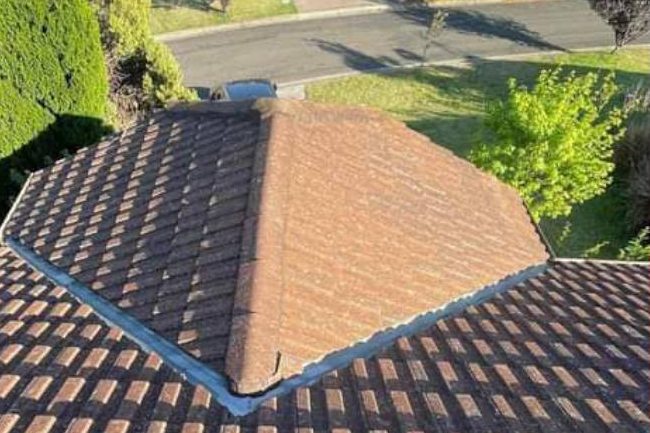
If you are having the roof or ridge capping repointed, ask the tradesperson to confirm they will keep weep holes open. See our repointing service.
What you can safely do yourself
- Look from the ground: check that the gaps are open and not filled with mortar or paint
- Clear light dirt and cobwebs gently from low weep holes
- Keep garden beds, soil and paving below the weep holes
- Do not seal or fill them, even if insects or vermin worry you. Special weep hole covers (vents or inserts) can keep pests out and still let water drain.
Never climb on a roof or use a ladder at height to check the high ones. Call a professional instead.
When to call a roofer
Get a professional inspection if:
- A roof meets a brick wall and you see damp or stains inside nearby
- Flashing looks rusted, lifted or sealed with a lot of sealant
- Your mortar is crumbling and you are planning repairs
- You are not sure which gaps in the wall are weep holes
Regular roof maintenance catches flashing and drainage problems before they cause damage. See also our roof maintenance checklist, or book roof repairs if you have a leak now.
Get a free quote
We give a free onsite quote with a clear written scope, and book the same day as your quote and take 10% off. Get your free quote or call 0434860035. For urgent leaks, see our emergency roof repairs.
Frequently asked questions
What are weep holes in a brick wall?
Weep holes are small gaps left in the brickwork, usually in vertical joints, that let water behind the bricks drain out and let the cavity breathe.
Should I fill in weep holes?
No. Filling them traps moisture inside the wall and can cause damp, mould, peeling paint and damaged bricks.
How do I know if the gaps in my wall are weep holes?
They are small, evenly spaced gaps in vertical joints, usually near the base of the wall, above windows and above roof flashing. If you are unsure, ask a bricklayer or roofer to check.
Can I stop insects getting into weep holes?
Yes. Use purpose-made weep hole covers or vents. They keep pests out while still letting water escape. Do not seal the holes with mortar or silicone.
Can blocked weep holes cause roof leaks?
They can cause leaks that look like roof leaks. Where a roof meets a brick wall, blocked weep holes and failed flashing can let water into the wall and ceiling below.
Who should repair brickwork and flashing?
Flashing and roof junctions are a roofer's job. Bricklaying and repointing may need a bricklayer. We can inspect the roof side and advise.