
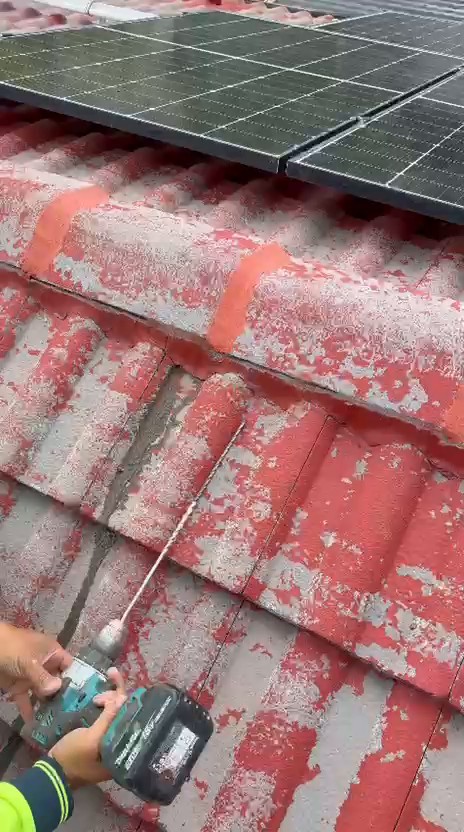
Look closely at the pointing along the ridge of a tile roof and you may see small gaps or holes in the cement or flexible pointing. They look like mistakes, and many people want them filled in. Please don't. They are called weep holes, and they are there on purpose.
This guide explains what weep holes in roof pointing do, how they get blocked, and why they matter every time a roof is repointed, restored or painted.
Short answer: weep holes let water that gets behind the ridge capping drain out. Block them and that water is trapped inside the bedding.
What are weep holes in roof pointing?
The ridge and hip capping on a tile roof is bedded on mortar (or a flexible bedding compound), then sealed along the edges with pointing. Even a well-built roof can let some water in behind the capping, from wind-driven rain or small cracks for example.
Weep holes are small openings left in the bedding and pointing so that water has a way out. They are positioned along the capping as the tile manufacturer specifies, and the Australian roof tile installation standard (AS 2050) expects them to be provided.
Why they matter
- They let trapped water escape instead of sitting behind the bedding
- They protect the mortar bed that holds the capping in place
- They help stop leaks showing up in the roof space and ceiling
What blocks weep holes?
| Cause | What happens |
|---|---|
| New pointing | Fresh pointing is smeared over the openings |
| Roof paint or sealer | Coating runs into the holes and dries across them |
| Mortar during re-bedding | Bedding is packed into the gaps |
| Dirt, moss and debris | Slowly fills the openings over time |
What happens when they are blocked?
Water that gets behind the capping can't drain. It builds up, softens the bedding and finds its own way out, often into the roof space or down to your ceiling. A roof that has just been repointed or repainted can start leaking because the weep holes were sealed during the job.
If you already have stains or drips, read our guide to roof leak repair in Sydney.
Weep holes during repointing and roof painting
A careful roofer will:
- Find the existing weep holes before any old pointing is removed
- Keep them open, or put new ones in the same positions when fresh bedding and pointing go on
- Drill them out after painting or pointing, so no paint or pointing is blocking them
- Check them again at the end of the job

See our repointing service and roof painting service. Ask any roofer you hire whether weep holes are kept clear as part of the job.
Signs your weep holes may be blocked
- Leaks or stains after a roof was repointed, re-bedded or painted
- Water marks near the ridge or hips
- Damp patches under the ridge in the roof space
- Pointing that looks completely solid with no small gaps at all
What to do
Don't walk on a tile roof to check. Wet and painted tiles are slippery and easy to break. Book an inspection, and ask the roofer to check the ridge and hips for weep holes. Regular roof maintenance helps catch problems early.
Get a free quote
We give a free onsite quote with a clear written scope, and book the same day as your quote and take 10% off. Get your free quote or call 0434860035. For urgent leaks, see our emergency roof repairs.
Frequently asked questions
What are weep holes in roof pointing?
They are small drainage gaps left in the bedding and pointing along ridge and hip capping so water behind the capping can escape.
Should weep holes be filled in?
No. Filling them traps water behind the bedding and can cause leaks.
Can painting a roof block weep holes?
Yes, paint can run into them and dry across them. A good painter checks and drills them out after the coating is applied.
Can blocked weep holes cause roof leaks?
Yes. Trapped water can soften the bedding and leak into the roof space or ceiling.
How many weep holes does a roof need?
It depends on the tile and capping system. The tile manufacturer's instructions set the spacing, and a roofer can show you where they should be.
Can I clear weep holes myself?
We don't recommend it. Working on a tile roof is dangerous, and it's easy to crack tiles or damage the pointing. Call a professional.